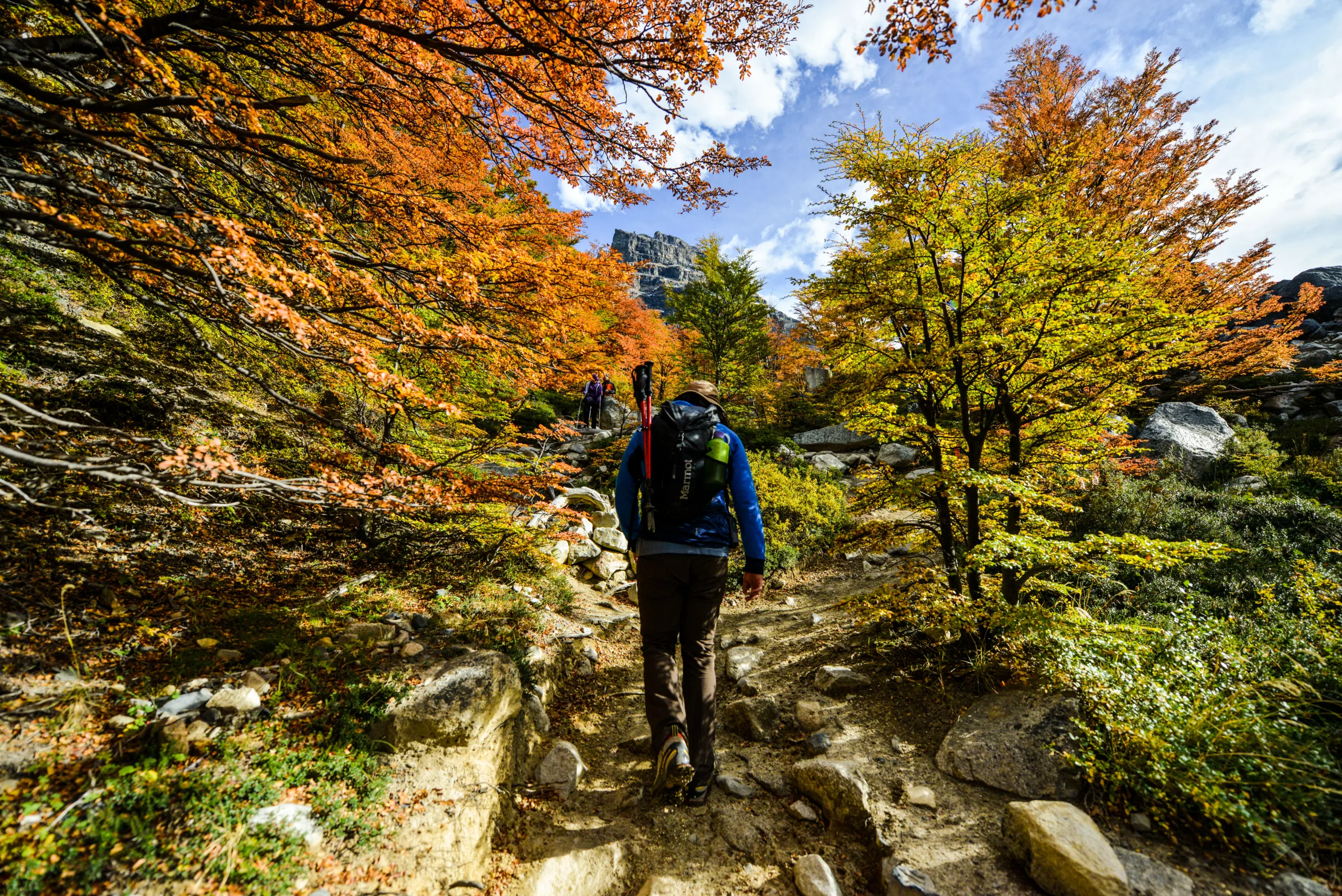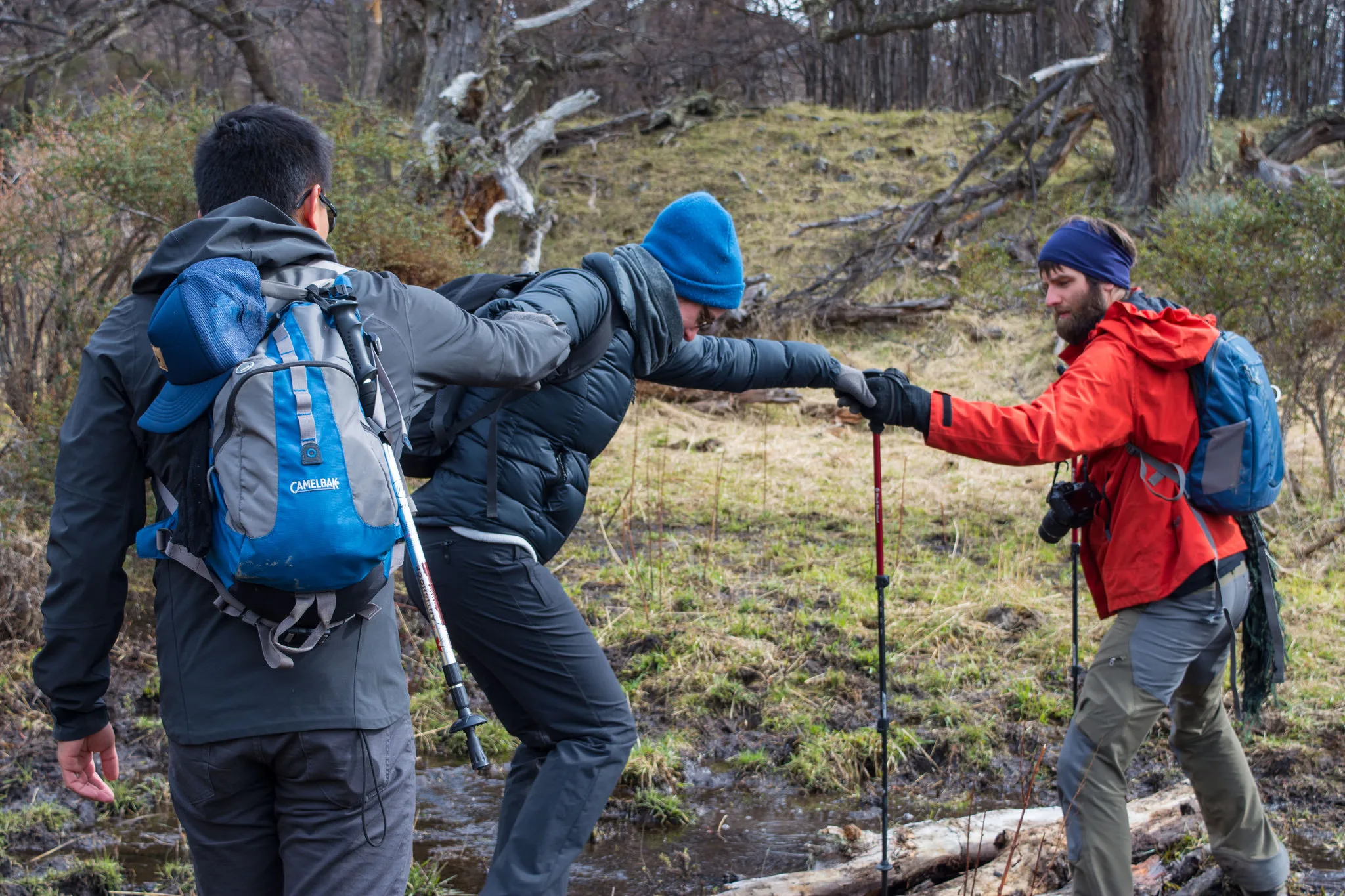
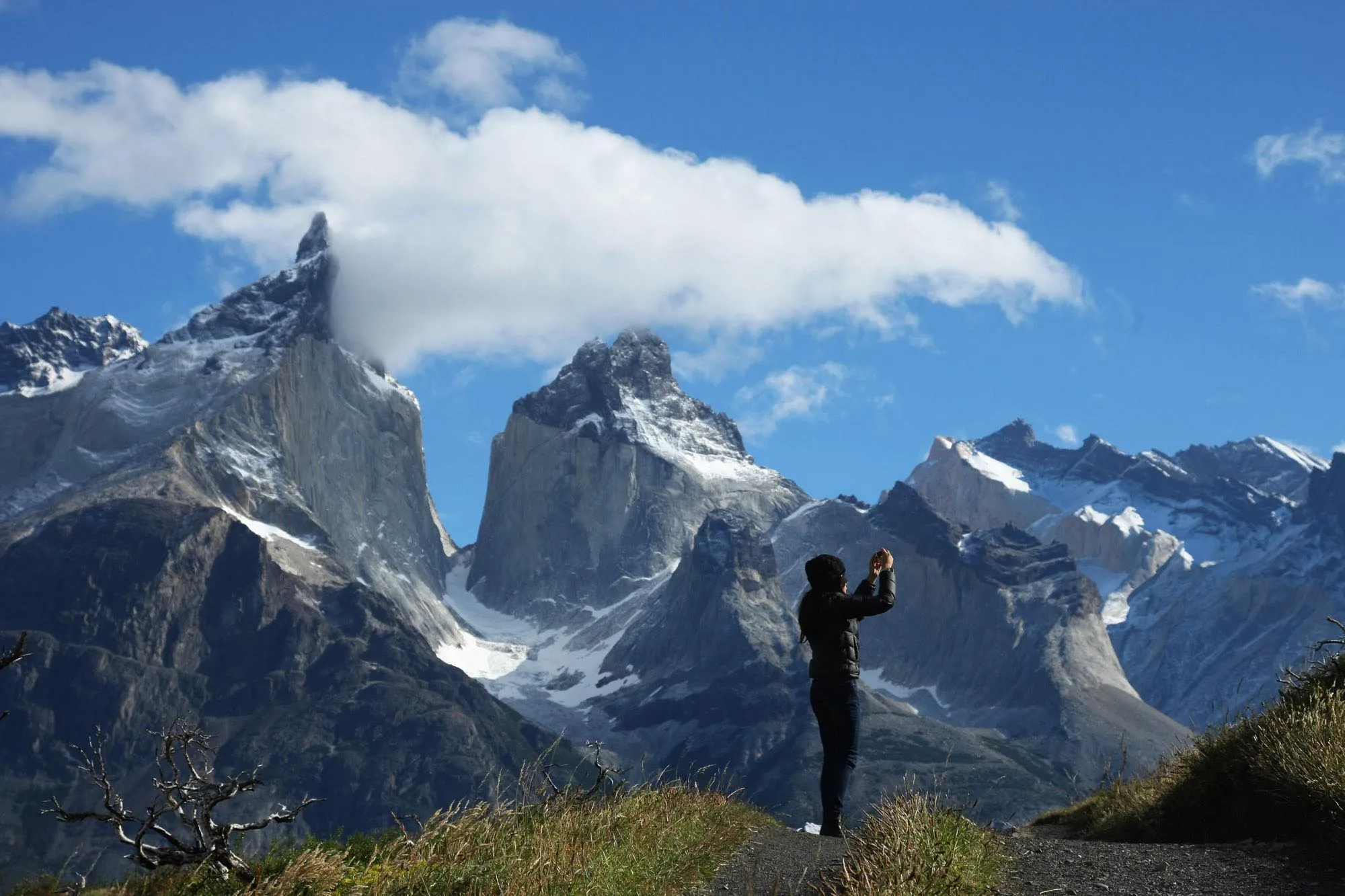
Fourteen days sounds generous until you lay a map of southern Patagonia on the table. Distances are long, flights and border crossings take time, and the places that reward you most, such as Torres del Paine or El Chaltén, need slack in case the weather changes your plan. If you are comparing a 14 day Patagonia itinerary across Chile and Argentina, the useful question is not which route is the best one, but which decisions shape it. This article walks through our reasoning: where to start and finish, a reference route for a couple who prefers not to hike long distances, how nights get divided, and what we would leave out.
From our travel designers: “How many nights each destination gets depends on the preferences of the people traveling. I would focus on southern Patagonia in Argentina and Chile, plus Buenos Aires and Santiago. If there are many destinations, Ushuaia could come out.”
There is no single ideal 14-day route
We say this first because it is the most useful thing we can say. A route that works well for two people who want to hike for several days will frustrate a couple who would rather spend their time on boats, in glacier country and at a good table in the evening.
The itinerary has to follow what you want to experience, not the other way around. That is why we design these trips one traveler at a time, and why this article explains decisions instead of presenting a fixed schedule. If you want to see how a complete day-by-day structure looks on paper, our 11-day Patagonia Chile & Argentina itinerary, with self-drive on the Chilean side, is the page to look at. Here we focus on the thinking behind a route of this size.
The frame: Santiago and Buenos Aires, with southern Patagonia in between
Our starting point is simple. We recommend entering through Santiago and leaving from Buenos Aires, or doing the same route in reverse. Both capitals are part of the trip, and the days between them go to southern Patagonia, on both the Chilean and the Argentine side.
Using the two capitals as gateways avoids retracing your steps. You cross the region once, in one direction, and each country gets its due. Which direction you choose usually comes down to flight options and to which city you would rather finish in after days outdoors.
If you are still deciding how to split your time between the two countries, our comparison of Chilean Patagonia and Argentine Patagonia covers the differences in more depth.
A reference route for a couple who does not want long hikes
To make this concrete, here is the route we would put on the table for a couple who is not especially interested in long walks. It is a hypothetical example, not a past client’s trip, and it is a starting point for a conversation rather than a final plan.
Santiago, Punta Arenas, Puerto Natales and Torres del Paine, El Calafate, El Chaltén (optional), Ushuaia (optional), Buenos Aires.
Santiago to Punta Arenas
The journey south begins with a flight from Santiago to Punta Arenas. This is where the trip shifts from city to landscape. From here you can arrange boat trips, visit glaciers and see penguins, which suits travelers who want wildlife and scenery without committing to multi-day trekking.
Puerto Natales and Torres del Paine
Next comes Puerto Natales, the usual base for Torres del Paine National Park. Even travelers who do not plan to hike long routes tend to want enough time in the park to see it properly and to have a buffer if the weather turns. If you do want to walk more, this is one of the two places where we would add days.
Crossing to El Calafate
From the Chilean side the route crosses into Argentina and continues to El Calafate, the base for visiting the Perito Moreno Glacier. The change of country is part of what makes this combination worthwhile: the two sides of Patagonia feel different in landscape, towns and rhythm.
El Chaltén and Ushuaia, depending on your interests
These two stops are optional, and we treat them that way. El Chaltén makes sense for travelers who want to walk, since it is the other major trekking destination in the route. Ushuaia suits those who want to reach the far south of the continent. Neither belongs in every itinerary, and the next sections explain why.
Closing in Buenos Aires
The route ends in Buenos Aires, a gentle way to finish after days in the wilderness and a natural place to connect with your flight home.
How we decide how many nights each place gets
You will notice we have not assigned a number of nights to each stop. That is deliberate. The right split depends on the people traveling, and any fixed table would be wrong for most of them.
These are the questions we ask when we divide the days:
- Do you want to trek? If so, we give more days to Torres del Paine or El Chaltén, because that is where walking is the main activity.
- Do you prefer cruises and boat trips? Then more of the time goes to the places where navigation, glaciers and wildlife are the focus, starting with Punta Arenas and Puerto Natales.
- Is this a honeymoon or a slower trip? Fewer stops and longer stays tend to work better than a full circuit.
- How much do you want from the two capitals? Santiago and Buenos Aires are both part of the trip, and some travelers want to explore them while others want a short stay.
Build in room for the weather
Trekking destinations are more exposed to the weather, so they need more flexibility in the plan. A walk that depends on a clear day cannot be locked to a single date without a fallback.
In practice, this means we avoid scheduling the most weather-dependent activity on the last day of a stay, and we avoid connecting tight transport legs right after it. That slack is one of the main reasons we do not recommend packing in as many places as the map allows.
What we would leave out
Fourteen days is a good amount of time for southern Patagonia. It is not enough for all of Patagonia, and trying to cover everything is the most common mistake we see.
Our recommendations are straightforward:
- Leave out the Carretera Austral. It is a different journey, with its own pace, and it does not fit well alongside the rest of this route.
- Leave out northern Argentine Patagonia. The same logic applies: it is better kept for another trip.
- Consider dropping Ushuaia. If the route is becoming too long, it is the first stop we would remove.
- Do not add every possible destination. A route with fewer stops leaves time for the weather, for rest and for the places you actually came to see.
The three errors we see most often are the same ones: too many destinations in 14 days, a route designed without asking what the traveler enjoys, and no flexibility for weather-exposed activities. Most of them can be fixed by removing a stop.
What to confirm before you commit
Some details have to be checked before any route becomes a real plan. Whether El Chaltén and Ushuaia both fit within 14 days, in addition to the rest of the route, depends on flight connections, transfer times and the season. We do not want to promise something that has not been verified for your dates.
Timing also matters. The Southern Hemisphere summer, roughly December to February, is the busiest period, and good places book early. Our article on what to book now for Patagonia in January and February explains what tends to fill first.
If your main interest is walking, it is worth looking at a route built around it. Our 13-day Torres del Paine O Circuit itinerary with the Perito Moreno Glacier is designed for that kind of traveler. For the broader process of planning across both countries, our guide on how to plan a tailor-made Patagonia journey across Chile and Argentina is the best companion to this article.
You can also read more about each side on our Chile and Argentina pages.
Planning your own route
If you’re mapping out a Patagonia trip and want a second opinion on timing or routing, we’re happy to help you think it through.