Patagonia trip planning usually starts with a map, and the map is where most plans go wrong. Patagonia is not a single destination. It is a vast region shared by Chile and Argentina, and the distances between its highlights shape every decision: how many days you need, which side to start on, how you cross the border, and how much of the trip you spend in each place rather than on the way to it.
This guide covers how much time to plan for, how Chilean and Argentine Patagonia differ, when to go, the routes that tend to work, how to connect Patagonia with the rest of South America, and the mistakes we see most often when travelers first get in touch with us.
From our travel designers: “Patagonia is very big. Most of the routes travelers send us in their first message end up changing, almost always because the distances were bigger than they expected. Our first adjustment is usually the same: one more day, sometimes two, in the places that matter. We want your trip to be about living each place, not moving from transfer to transfer.”
How much time should you dedicate to Patagonia?
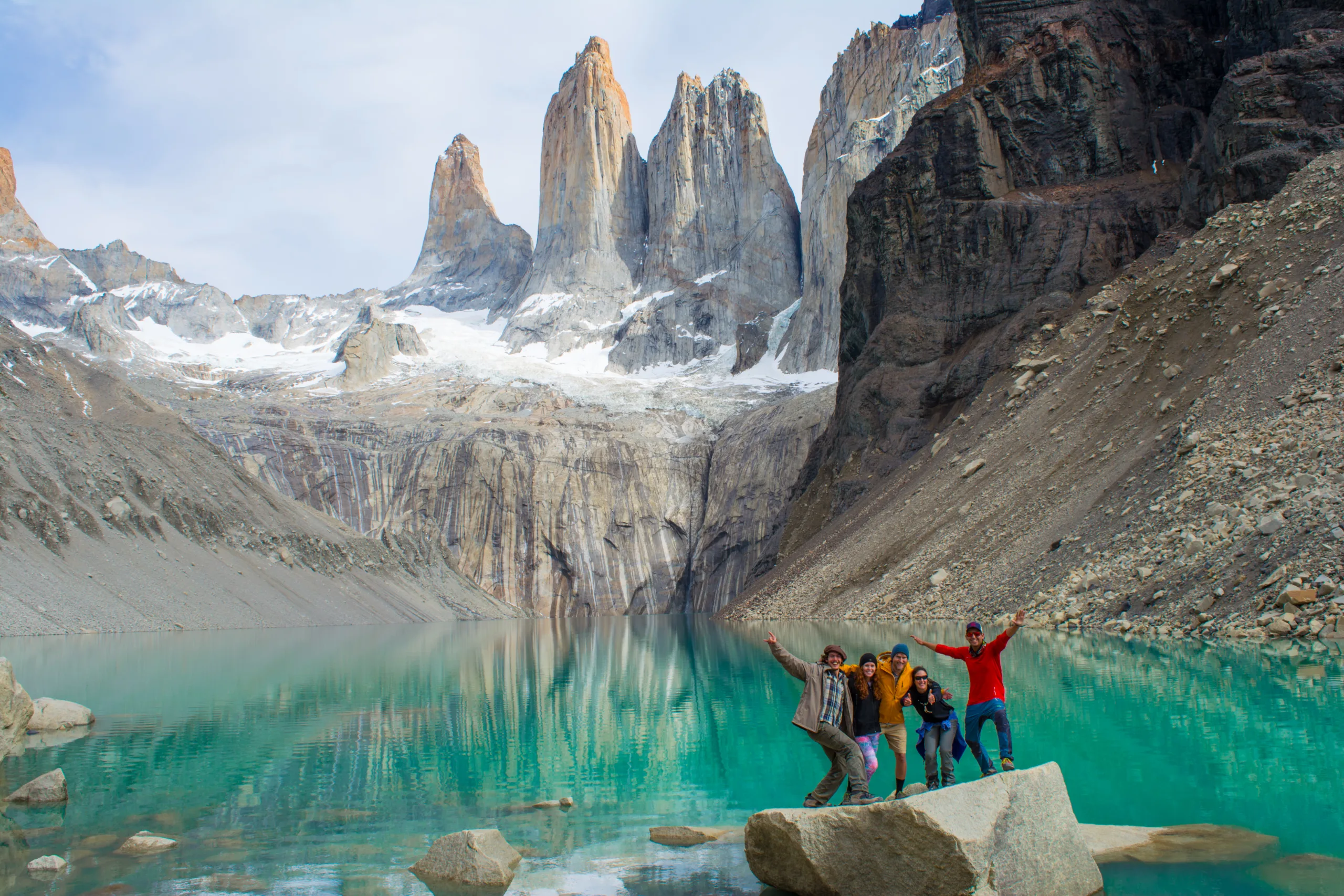
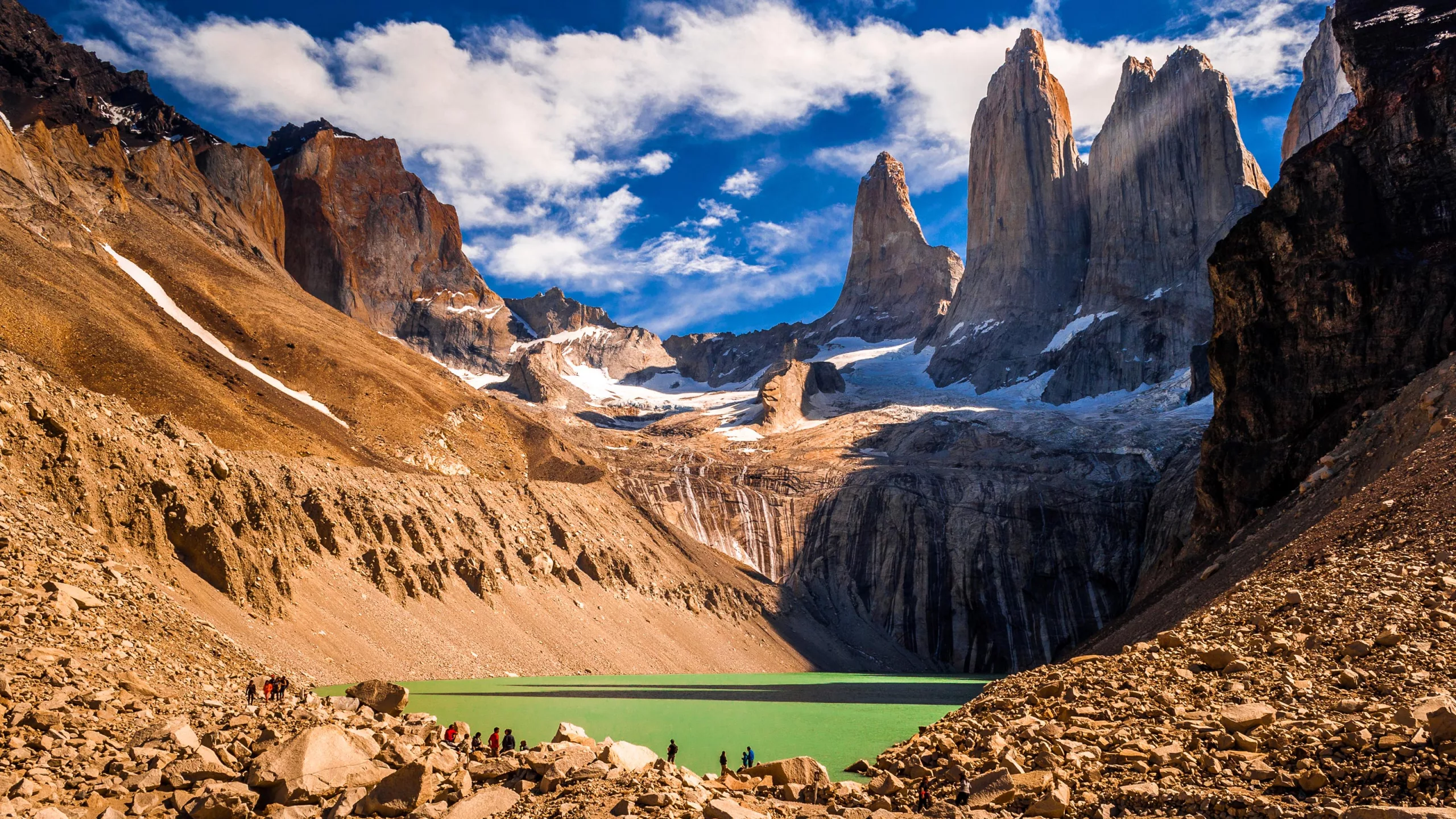
It depends on what you mean by “seeing Patagonia.” With one week, our advice is to focus on one destination, two at most. Torres del Paine can be seen in a full-day visit from Puerto Natales if you want a first look without long hikes. If you want to walk its famous circuits, the W or the full O, plan for several days in the park: at least 4 to 5 for the W, and more for the O, with time to rest and absorb weather delays, which are common here and not a sign that anything went wrong.
A fuller picture that includes both the Chilean and Argentine sides realistically takes 14 to 25 days. That is a matter of geography, not a push toward a longer trip. Distances are larger than they look on a map, and moving between hubs by road or by air takes real time. Travelers who compress a two-country itinerary into a week usually spend more time in vehicles and airports than in the places they came to see.
When time is short, going deep into one region is the better trip. We would rather say that up front than build an itinerary we know will not hold up on the ground.
Chilean and Argentine Patagonia: two different experiences
We often recommend seeing both sides, because together they give you a far more complete sense of what Patagonia is. They feel like two different regions.
Chilean Patagonia is shaped by the sea. Fjords, dense vegetation and temperate rainforest give it a green, almost jungle-like character in places. Torres del Paine is its best-known park, but we also like to point travelers toward the Carretera Austral, a long road through small towns, glaciers and national parks. In our experience, it remains very pristine, with little tourism and a strong sense of purity.
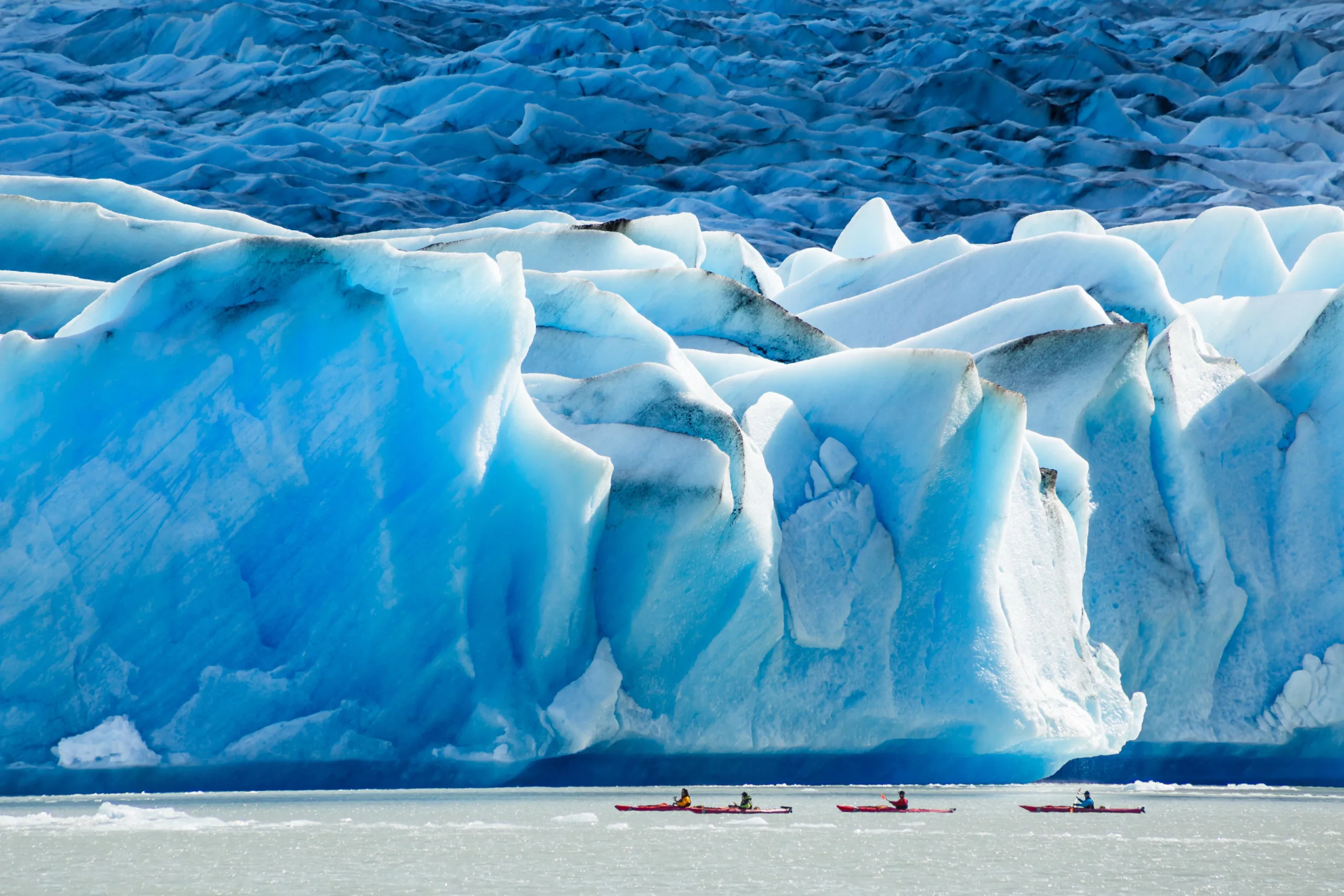
Argentine Patagonia opens into steppe: wide, dry and windswept, with some of the continent’s most iconic glaciers, including Perito Moreno near El Calafate. For travelers who enjoy walking, nature and a freer kind of experience, we often suggest El Chaltén, where many of the classic trails, including those with views of Mount Fitz Roy, can be hiked on your own.
We go deeper into how the two sides compare, and which one suits a first visit, in our guide to Chilean vs. Argentine Patagonia.
Going further north: the Lake District and Bariloche
To broaden the picture, a route can add the north: Puerto Varas and the Lakes and Volcanoes region on the Chilean side, or Bariloche on the Argentine side. Lakes, forests and volcanoes give the trip a different rhythm, and they work well as a softer start or finish before or after the far south.
When to travel
Each season offers a different Patagonia, and the weather also varies from one year to the next, so we plan with both in mind.
High season runs from November through March, the Southern Hemisphere’s spring and summer, when days are long, trails are open and most operators run full schedules. It is also when accommodation and park access are most likely to sell out, and when the most popular places are busiest.
Shoulder season, October and April, trades some weather predictability for smaller crowds and better availability. That matters in a park like Torres del Paine, where lodging is limited. For travelers with some flexibility, it is often the more comfortable window.
Winter (June to August) is a different kind of trip: quieter and colder, better suited to Bariloche’s ski season or a slower visit than to long trekking days.
Plan around how Patagonia operates
Some tours and excursions in Patagonia do not run every day. A good itinerary is built around those operating days, not the other way around. Placing a boat trip or a guided excursion on a day it does not run is one of the easiest ways for a plan to fall apart.
Transport between the two countries needs the same care. Crossing the border usually means a land crossing at a remote checkpoint, and connections are not always daily. A private vehicle is the most flexible option, but on some routes it becomes very expensive. In many cases we recommend regular buses for the crossing, so the trip stays comfortable without raising the budget more than it needs to.
Possible routes
These are starting points, not fixed packages. Every itinerary we design is adjusted to the traveler’s pace, interests and dates. One traveler, for example, wanted to drive through Patagonia on their own, and we reworked the route considerably: in the final plan, the rental car covers the Chilean side, from Punta Arenas through Torres del Paine, and is returned in Puerto Natales before a regular bus crosses to El Calafate and El Chaltén. Another itinerary, built around the O Circuit, had to be adapted for a large group.
Classic route (10 to 12 days): Punta Arenas, Torres del Paine, El Calafate and El Chaltén. It covers the highlights of both countries without overextending the trip and works well for a first visit. See an example in our Patagonia: Chile & Argentina itinerary.
Extended route (18 to 25 days): the classic route plus Ushuaia at the southern tip of Argentina, or an extension north into the Lake District and Bariloche. It suits travelers who want more time in each place and a broader sense of how varied Patagonia is.
Trekking-focused route: for travelers who want hiking at the center of the trip, the full circuit in Torres del Paine combined with Perito Moreno Glacier. See our Patagonia O Circuit itinerary.
Less-traveled route: the Carretera Austral, for travelers who value remoteness and quiet over famous viewpoints.
Connecting Patagonia with the rest of South America
Santiago and Buenos Aires work well as entry and exit points: a trip can start in one and finish in the other. That opens up combinations that turn Patagonia into part of a larger trip:
- From Santiago: Easter Island or the Atacama Desert.
- From Buenos Aires: Mendoza’s wine country, Iguazú Falls (one of the New 7 Wonders of Nature) or a few days in Uruguay.
- Antarctica: voyages can be connected with Patagonia from Ushuaia or Punta Arenas.
Connected well, these feel like one coherent journey rather than a series of separate bookings.
Common mistakes we see
These come up often enough in early trip ideas that they are worth naming:
- Underestimating distances. What looks like a short hop on a map can be a full day of travel.
- Too many destinations in too few days. Patagonia rewards real time in fewer places more than a long checklist.
- Ignoring season and weather. Conditions, crowds and availability change across the year, and from one year to the next.
- Not checking operating days. Some tours run only on certain days, and the itinerary has to fit them.
- Booking high season late. Torres del Paine in particular fills up months in advance.
Why work with a travel designer
You do not need to outsource every decision about your trip. But Patagonia has logistical complexity, from border crossings to limited park capacity and seasonal schedules, that is easy to underestimate from the outside and expensive to get wrong once you are there.
Nave Tours has worked in this region for years, with a local network on both the Chilean and Argentine sides. That is what makes the difference: knowing which routes flow well, when a bus makes more sense than a private transfer, and where the seasonal bottlenecks are before they become your problem.
Frequently asked questions
How many days do I need for Patagonia?
With one week, focus on one area, two at most. To include both the Chilean and Argentine sides comfortably, plan for 14 to 25 days.
Should I visit Chilean or Argentine Patagonia?
They offer different experiences: the Chilean side is shaped by the sea, fjords and forest, and the Argentine side by steppe and glaciers. If you have the time, combining both gives you the most complete picture.
Can I start my trip in Santiago and finish in Buenos Aires?
Yes. It is one of the most practical ways to see both sides, and it makes it easy to add destinations such as Easter Island, Atacama, Mendoza, Iguazú or Uruguay.
When is the best time to visit Patagonia?
November to March offers the longest days and the most open trails, with the most demand. October and April are quieter, with better availability. Conditions vary from year to year, so we plan each trip with the current season in mind.
Can I hike in Patagonia without a guide?
In some places, yes. El Chaltén is known for trails that many travelers walk on their own. Other areas and activities work better with a local guide, and we help you decide which is which.
Planning your own route
If you’re mapping out a Patagonia trip and want a second opinion on timing or routing, we’re happy to help you think it through.